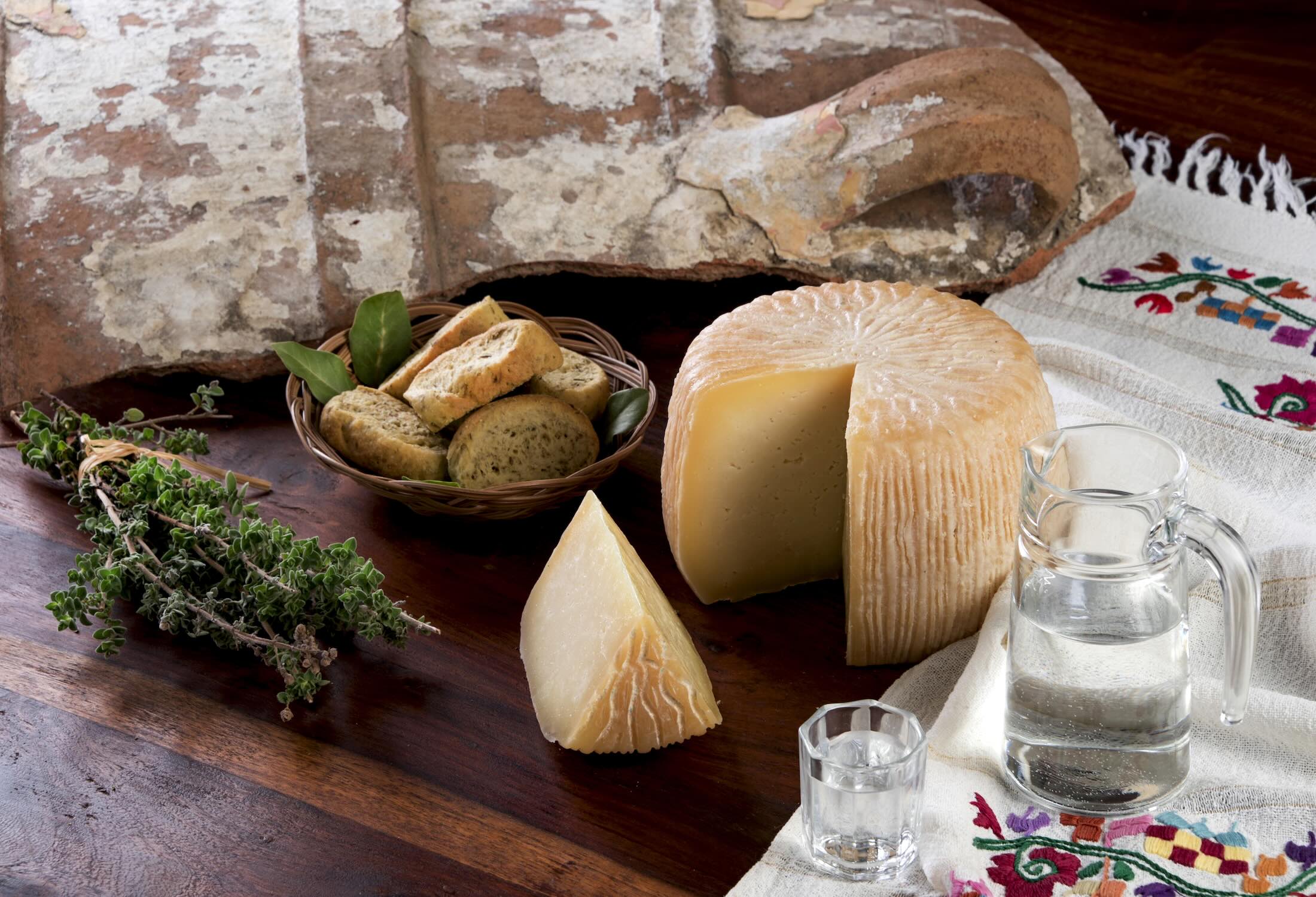
Cheese is at the heart of Cretan cuisine, reflecting the island’s long pastoral tradition and close relationship with the land. Sheep and goat herding has shaped Cretan food culture for thousands of years, and the island’s cheeses are deeply connected to its mountains, seasonal rhythms, and family-run dairies.
One of the most well-known cheeses of Crete is graviera, a firm, pale-yellow cheese made primarily from sheep’s milk, sometimes with a small amount of goat’s milk. Graviera is aged for several months, giving it a slightly sweet, nutty flavor that deepens over time. It is enjoyed in many ways: sliced at the table, grated over pasta, or fried as saganaki, where its gentle sweetness really shines.
Mizithra is another essential Cretan cheese, prized for its freshness and versatility. Made from whey left over after cheese production, it comes in both fresh and aged forms. Fresh mizithra is soft, white, and lightly sweet, often paired with honey or fruit, while aged mizithra is dry, salty, and hard, commonly grated over dishes like pasta or used to season savory pies.
Soft and spreadable cheeses also play an important role in Cretan cooking. Anthotyro, made from sheep or goat whey with added milk, has a delicate, milky flavor and a light texture. It is often eaten fresh with bread and olive oil, or baked into pastries. Staka, although richer and more unique, is a creamy dairy product made by skimming the cream from sheep’s milk and slowly heating it, resulting in a luxurious ingredient used in traditional dishes.
Together, these cheeses reflect the diversity and richness of Crete’s food culture. Each variety is shaped by local methods, climate, and centuries-old knowledge passed down through generations. Whether enjoyed simply with bread and olive oil or incorporated into complex recipes, Cretan cheeses offer an authentic taste of the island’s heritage and everyday life.