Crete isn’t just the largest Greek island—it’s basically a living history book floating in the Mediterranean. Humans have lived here for over 130,000 years, making Crete one of the oldest continuously inhabited places in Europe. Thanks to its strategic location between Europe, Asia, and Africa, the island has been conquered, traded over, and fought for more times than most places on Earth. Every village, cave, and coastline seems to have a story hiding in plain sight.
One of Crete’s biggest claims to fame is the Minoan civilization, Europe’s first advanced civilization, which flourished around 2700–1450 BCE. Fun fact: the Minoans built multi-story palaces with indoor plumbing and flushing toilets thousands of years before most of Europe figured out basic sanitation. Their palace at Knossos is famously linked to the myth of the Minotaur and the Labyrinth—proof that some Greek myths may have been inspired by very real (and very complex) architecture.
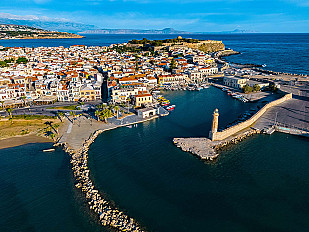
Crete also has a long history of resisting invaders. When the Romans, Byzantines, Arabs, Venetians, and Ottomans came along, the Cretans didn’t exactly roll out a welcome mat. A fun historical twist: during Venetian rule, locals were forced to build massive fortresses—many of which later helped Cretans defend themselves against future occupiers. Even today, those walls and forts dominate cities like Heraklion, Chania, and Rethymno.
Here’s a surprising fact: Crete played a crucial role in World War II. In 1941, the Battle of Crete became the first time in history that a major invasion was launched almost entirely by paratroopers. Local civilians—armed with hunting rifles, knives, or sometimes just farming tools—joined the fight. Their fierce resistance shocked the Nazis and became legendary, influencing how airborne invasions were viewed for the rest of the war.
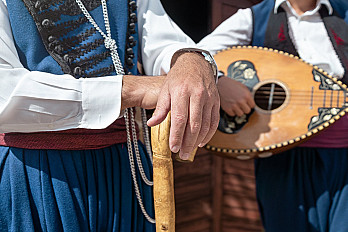
Today, Crete’s history isn’t locked away in museums—it’s baked into daily life. Ancient ruins sit next to modern cafés, old Venetian harbors host fishing boats, and traditional music still carries echoes of centuries of struggle and celebration. Fun fact to end on: many Cretans say they don’t just feel Greek—they feel Cretan first, a reflection of an island that has always marched to the beat of its own historical drum.