The traditional music of Crete is one of the most vibrant and distinctive musical traditions in Greece, deeply tied to the island’s history, landscape, and sense of identity. More than simple entertainment, Cretan music functions as a living expression of collective memory, storytelling, and community values. For centuries, it has accompanied every major moment of life—from celebrations and weddings to mourning and resistance—helping preserve local culture even during periods of occupation and hardship.
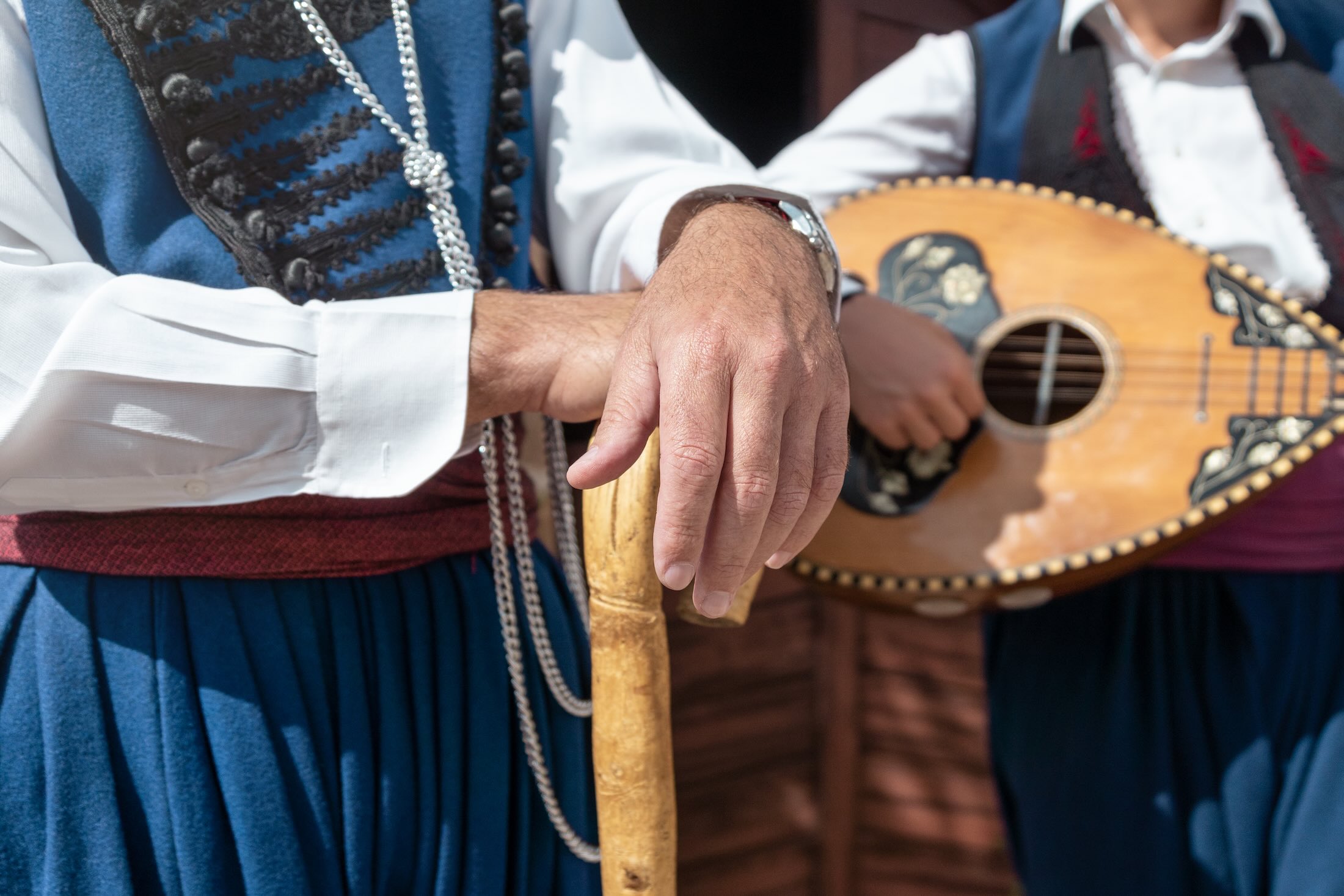
At the heart of Cretan music is the lyra, a small bowed instrument whose piercing, emotional sound defines the island’s musical character. The lyra is typically played alongside the laouto, a long-necked lute that provides rhythmic and harmonic support. Together, these instruments create a dynamic dialogue: the lyra sings the melody while the laouto drives the dance forward. This pairing allows musicians to improvise freely, giving performances a spontaneous and deeply personal feel.
Cretan songs often take the form of mantinades, short rhyming couplets that express love, pride, sorrow, humor, or philosophy. These verses are frequently improvised on the spot, showcasing both linguistic skill and emotional intelligence. Mantinades reflect the Cretan spirit—direct, poetic, and unafraid of intensity—and are an essential part of social gatherings, where music becomes a shared creative act rather than a one-way performance.
Dance is inseparable from Cretan music, with each region of the island preserving its own styles and rhythms. Dances such as the pentozali, syrtos, and sousta vary in tempo and mood, ranging from dignified and flowing to fast and explosive. These dances are not merely choreographed routines; they are communal rituals that reinforce bonds, honor tradition, and allow individuals to express strength, grace, and endurance.
Historically, Cretan music has also played a role in resistance and resilience. During periods of Venetian and Ottoman rule, and later during World War II, songs became tools of defiance and remembrance. Lyrics often referenced freedom, heroism, and sacrifice, transforming music into a form of cultural survival. Even today, these themes resonate strongly, reinforcing a deep sense of pride in Cretan heritage.
In modern times, traditional Cretan music continues to evolve without losing its roots. Contemporary musicians experiment with new arrangements and collaborations while remaining respectful of established forms and instruments. Festivals, village feasts, and family gatherings ensure that the music is passed down naturally from one generation to the next. As a result, Cretan traditional music remains not a relic of the past, but a powerful, living tradition that continues to shape the island’s cultural identity.