The island of Crete, home to Europe’s earliest advanced civilization, preserves two of the most iconic archaeological sites of the ancient world: the palaces of Knossos and Phaistos. These magnificent centers of Minoan culture flourished during the Bronze Age and continue to captivate visitors with their architecture, mythological connections, and the mysteries they still hold. Their histories, though intertwined, reveal fascinating differences in power, style, and regional identity.
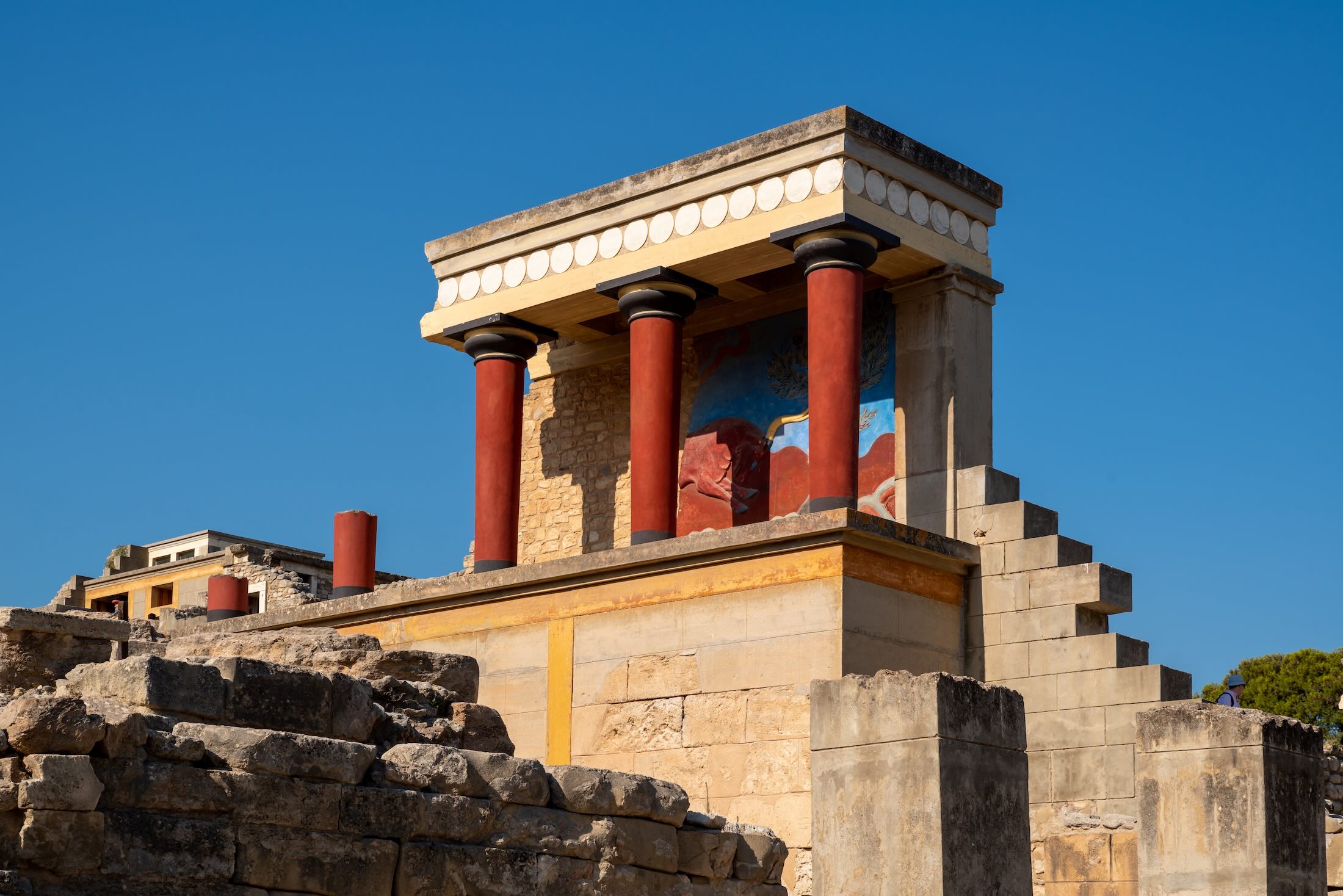
The Palace of Knossos, located near modern-day Heraklion, is considered the ceremonial and political heart of Minoan civilization. First constructed around 1900 BCE and expanded after a major earthquake, Knossos grew into a vast labyrinth of multi-story buildings, storerooms, workshops, and fresco-filled halls. The site is strongly connected to Greek mythology—most famously the legend of King Minos, the Minotaur, and Daedalus’s labyrinth—which likely stems from the palace’s complex, maze-like architecture. Excavated in the early 20th century by Sir Arthur Evans, Knossos gained global fame, though his reconstructions remain the subject of scholarly debate.
In contrast, the Palace of Phaistos lies in southern Crete overlooking the fertile Mesara Plain. Built during the same general period as Knossos, Phaistos served as a major administrative and religious center for the region. Its architecture is more conservative and less reconstructed, allowing visitors to experience the ruins in a more authentic state. Phaistos is best known for the Phaistos Disc, a mysterious fired-clay artifact imprinted with spiral symbols that remains undeciphered—a striking reminder of how much of the Minoan world remains unknown.
Despite their differences, both palaces reveal the sophistication of Minoan society. Their advanced drainage systems, grand staircases, large courtyards, and vibrant art suggest a civilization that valued ceremony, communal gatherings, and aesthetic expression. The palaces also served as hubs for trade, administration, and religious rituals—roles that helped Minoans flourish across the Aegean.
Today, Knossos and Phaistos stand as monumental windows into Europe’s prehistoric past. Visitors walking their ancient corridors can imagine the vibrant culture that once thrived there, long before classical Greece. Their preservation and ongoing study not only illuminate Minoan achievements but also inspire new questions about the origins of European civilization and the enduring power of myth, archaeology, and human creativity.